
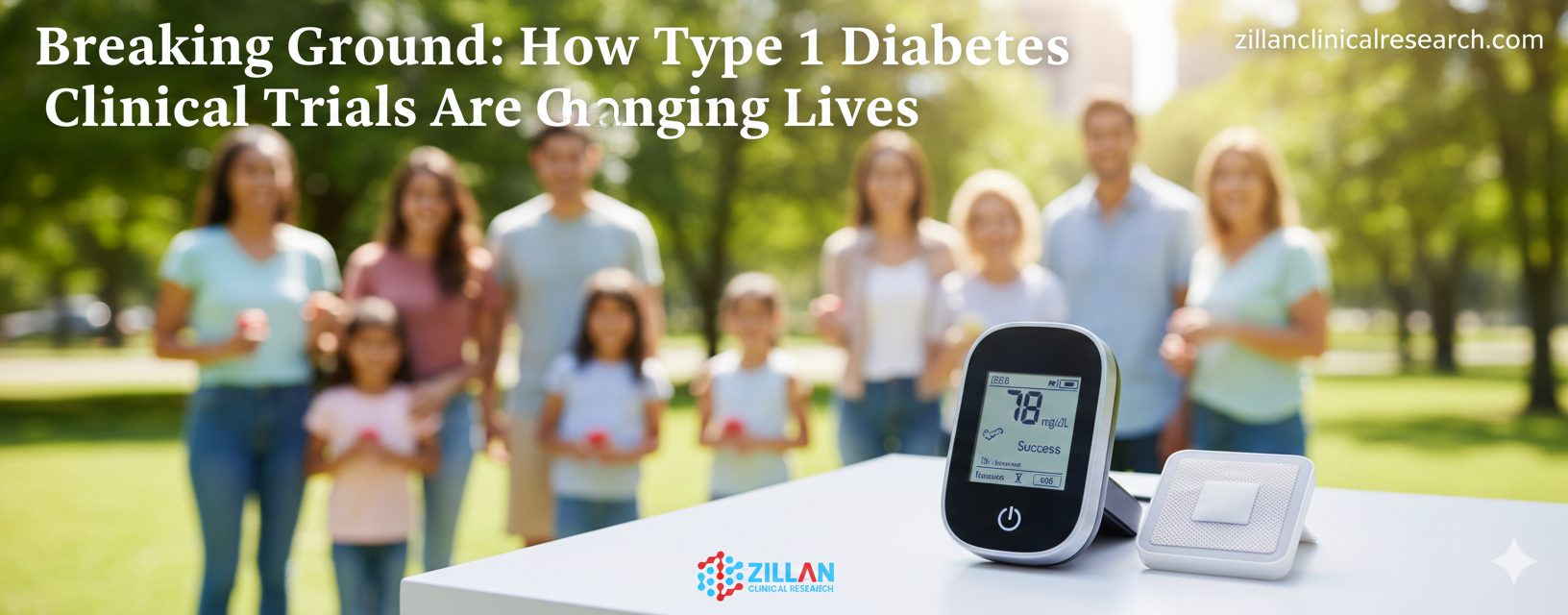
For millions living with type 1 diabetes, daily management can be complex and exhausting. But behind the scenes, scientists and researchers are working tirelessly to change that. Through type 1 diabetes clinical trials, breakthroughs are happening that could lead to better treatments—and potentially, a cure.
This blog explores how these trials work, why they matter, and how you or a loved one can get involved in shaping the future of diabetes care.
What Are Clinical Trials?
Clinical trials are research studies involving human participants. They’re designed to evaluate the safety and effectiveness of new drugs, devices, therapies, or strategies for managing diseases—like type 1 diabetes.
They go through four key phases:
- Phase 1: Tests safety and dosage on a small group
- Phase 2: Examines effectiveness and side effects
- Phase 3: Confirms effectiveness with a larger population
- Phase 4: Post-approval monitoring for long-term impact
Each phase builds on the last, moving us closer to life-changing therapies.
Why Type 1 Diabetes Clinical Trials Matter
Type 1 diabetes is an autoimmune condition in which the immune system attacks insulin-producing beta cells in the pancreas. While insulin therapy manages the condition, it doesn’t cure it. This is where clinical trials for type 1 diabetes come in.
Ongoing trials are working on:
- Beta cell regeneration
- Immunotherapy to stop disease progression
- Artificial pancreas systems
- Closed-loop insulin delivery
- Stem cell therapies
- Prevention strategies in high-risk individuals
These studies are vital for discovering safer, more effective ways to treat and potentially reverse the disease.
How Clinical Trials Are Changing Lives
Clinical trials aren’t just theoretical—they’re already improving lives:
- Faster, smarter insulin delivery systems are emerging from device trials.
- Preservation therapies are helping newly diagnosed individuals keep more of their natural insulin production.
- Genetic screening in prevention trials is helping identify and protect at-risk family members before symptoms appear.
Participants often gain access to advanced treatments not yet available to the general public, while contributing to medical progress that benefits the whole community.
Who Can Participate in a Type 1 Diabetes Clinical Trial?
Each study has its own inclusion criteria. You may be eligible if you:
- Are newly diagnosed or have lived with type 1 diabetes for years
- Are a relative of someone with type 1 diabetes (for prevention studies)
- Are between certain age ranges (e.g., pediatric or adult trials)
- Have specific blood markers or genetic indicators
There are also prevention trials for children and adults who are genetically at risk but don’t yet show symptoms.

Final Thoughts
Type 1 diabetes clinical trials are more than just scientific studies—they’re a source of hope, progress, and real impact. Whether you’re managing diabetes yourself, supporting a loved one, or simply curious, there’s a growing movement of people making a difference through research.
As these trials continue breaking ground, they bring us closer to a world where type 1 diabetes is no longer a lifelong burden—but a problem science has solved.


2 Comments
Harold Johnson
Donec rutrum nibh quis molestie blandit. Suspendisse id nisi at enim imperdiet convallis. Donec sodales tellus et leo sagittis, eu consectetur turpis porta. Phasellus diam quam, ullamcorper ut mattis varius, interdum vitae augue. Vestibulum pulvinar massa libero. Praesent ultrices dignissim tortor quis tincidunt. Vestibulum ac dignissim nibh.
Charlie Green
Donec id blandit felis. Aenean placerat sodales commodo. In sed odio at sapien consequat semper ac a elit. Nunc consequat ac tortor quis dignissim. Integer ac commodo elit. Donec finibus cursus tortor, et bibendum turpis interdum non. Nam mattis enim in metus interdum, vel suscipit arcu porttitor. Cras vitae nisi et dui efficitur fringilla ut vitae sapien.